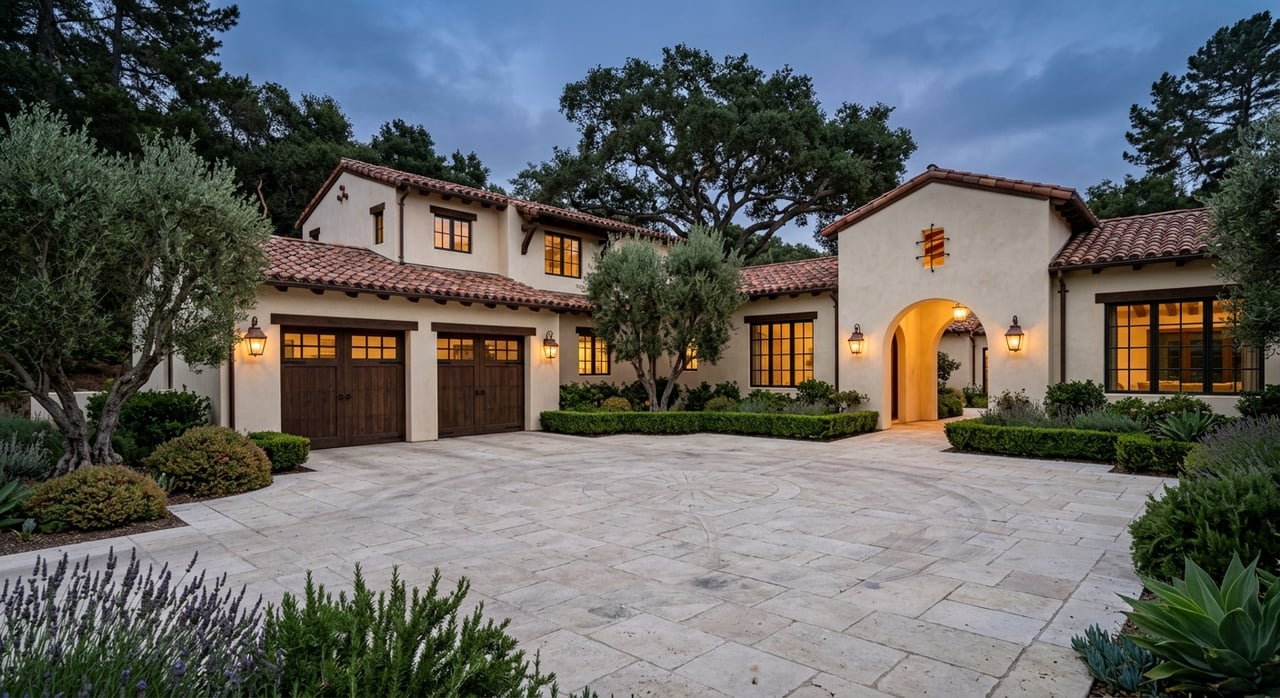
What To Know Before Upsizing To A Saratoga Estate Home
June 25, 2026
June 25, 2026
Thinking about trading up to a Saratoga estate home? The jump can be exciting, but it also comes with a different set of ownership realities than a typical move-up purchase. If you want more land, more privacy, and more flexibility for entertaining or future improvements, it helps to know how Saratoga’s lot constraints, permitting rules, and long-term carrying costs can shape your decision. Let’s dive in.
In Saratoga, upsizing often means stepping into a mature, built-out market rather than choosing from a wide supply of newly created estate lots. City planning materials describe Saratoga as roughly 95% single-family homes, with much of the remaining vacant land in hillside areas affected by steep slopes, unstable soils, and related safety constraints.
That matters because a large lot on paper does not always translate to easy expansion or simple outdoor living in practice. In Saratoga, estate value often comes from a combination of lot size, privacy, usable outdoor area, and how well the property fits within local zoning and site conditions.
When you tour estate homes, the gross lot size can be one of the first numbers that stands out. But in Saratoga, that number may overstate how much flat, buildable, or low-maintenance space you actually get.
The city’s zoning framework includes districts such as R-1-20,000, R-1-40,000, and Hillside Residential. Development standards can be shaped by setbacks, lot coverage, slope, and net site area, which means the usable part of a parcel may be meaningfully smaller than the total lot size shown in a listing.
On hillside or irregular parcels, slope can reduce the net site area used to calculate allowable floor area. In Hillside Residential areas, lot coverage is capped at 25% of net site area or 15,000 square feet, whichever is less.
If you are picturing a larger lawn, pool, guest space, expanded driveway, or future addition, you will want to evaluate the site plan early. A property can feel spacious while still having meaningful limits on where you can build or hardscape.
Before you commit to an estate property, it is smart to confirm:
These details can affect both your day-to-day enjoyment and your future options.
Upsizing to a Saratoga estate home usually changes your monthly carrying costs in ways that go well beyond your mortgage payment. Taxes, landscape upkeep, irrigation, utilities, and site maintenance all deserve a close look.
For many buyers, the biggest surprise is not the interior of the home. It is the cost and complexity of managing a larger piece of property over time.
In Santa Clara County, property taxes follow Proposition 13 rules. The base rate is 1% of assessed value plus voter-approved debt, assessed value growth is generally limited to 2% per year, and supplemental tax bills may follow a change in ownership or new construction.
For an estate purchase, that means your budget should account for the purchase-year tax reset. If you later remodel or add improvements, supplemental assessments may also affect your long-term ownership costs.
Large grounds can be a major part of the appeal of estate living, but they can also become one of the biggest recurring expenses. Saratoga’s water-efficient landscape rules require documentation, irrigation audits, and final inspection for covered landscape projects.
Valley Water notes that as much as 50% of outdoor water use can be wasted by inefficient irrigation. It also reports that lawns can be the single biggest water user on a property, with even a small lawn potentially using more than 18,000 gallons a year.
If you are upsizing for outdoor lifestyle, think about whether you want a showpiece landscape, a lower-maintenance layout, or something in between. The right answer depends on how you plan to live in the home, not just how the property looks on showing day.
Saratoga homes are served by San Jose Water Company. Sewer service is split between Cupertino Sanitary District and West Valley Sanitation District, while PG&E and Silicon Valley Clean Energy provide electricity, and West Valley Recycles handles garbage and recycling.
That mix reinforces an important point: estate-home ownership is as much about site management as interior finishes. A beautiful property runs best when you understand its systems, service providers, and ongoing upkeep demands.
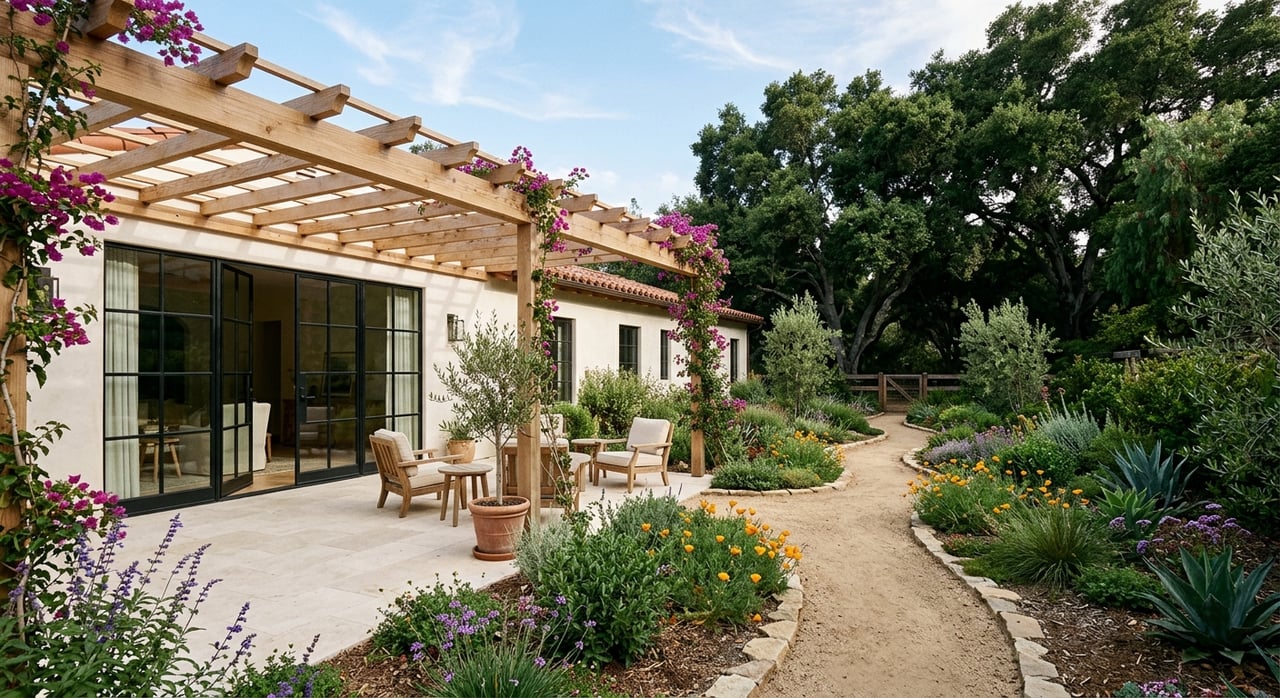
Many estate buyers picture a pool, cabana, detached flex space, expanded parking, or a circular driveway. Saratoga can support those kinds of amenities, but the city regulates them closely.
If outdoor living is one of your main reasons for upsizing, early due diligence can save time, money, and disappointment.
Accessory structures over 10 feet high or 250 square feet are not allowed within setbacks. Depending on the project, encroachment permits may also be needed for driveways, circular driveways, and retaining walls or hardscape near the street.
That means your wish list has to fit the site, not just the lot size. A larger parcel may still have placement limits tied to setbacks, right-of-way conditions, and other physical constraints.
Saratoga allows one attached ADU, two JADUs, and one detached ADU on a qualifying single-family lot. On lots of at least 10,000 square feet, the city can also grant a one-time 10% increase in site coverage and allowable floor area for a deed-restricted lower-income ADU.
For buyers who want flexible living space, that can create useful options. Still, any ADU plan has to fit within the underlying zoning envelope and the realities of the parcel.
Backup power is another common goal for estate buyers. Saratoga requires plan review for emergency or standby generators, including a site plan that shows setbacks, trench lines, and trees, and generators are not allowed in required front, side, or rear setbacks.
If a generator is on your must-have list, it is worth checking whether the current setup is permitted or whether a future installation will fit the property cleanly.
In Saratoga, wildfire resilience is not a side issue. It is part of responsible ownership, especially for larger or hillside properties.
The city identifies Saratoga as one of the Santa Clara County communities with Very High Fire Hazard Severity zones. CAL FIRE guidance cited by the city states that defensible space should extend 100 feet around a home, with the first 5 feet treated as an ember-resistant zone.
Mature trees are often part of what makes a Saratoga estate property feel special. They can also affect your maintenance plan, upgrade budget, and permit path.
Saratoga protects all trees with a trunk diameter of 10 inches or more, regardless of species. A permit is required before removing a protected tree, and city rules effective March 6, 2026 also allow trees within five feet of a home to be removed for wildfire risk reduction, but only with a permit and a maintained non-flammable zone.
For buyers, that means tree placement is not just a visual consideration. It can influence defensible space planning, driveway changes, additions, and overall site use.
If you are considering a hillside estate home, geotechnical review should be a serious part of your evaluation. Saratoga requires geotechnical clearance for new buildings, additions, and basement work in geologically sensitive areas such as the hillsides and areas near creeks.
This is where drainage, retaining walls, slope stability, and foundation planning become especially important. Before you assume a property can easily support a major remodel, it is wise to understand whether the site may require extra studies, engineering, or review.
When you upsize, it is easy to focus on your immediate lifestyle goals. But in Saratoga, durable resale value often comes from a balanced combination of estate scale, practical maintenance, usable outdoor space, and permit-clean improvements.
Because the city is largely built out and much of the remaining vacant land is hillside-constrained, buyers often place real value on homes that offer larger sites with flatter, functional outdoor areas and manageable upkeep. In other words, the best estate homes tend to feel impressive without becoming overly complicated to own.
If you are preparing to buy a Saratoga estate home, keep this checklist in mind:
A thoughtful review up front can help you choose an estate property that feels just as good in daily life as it does on first impression.
If you are weighing a move into a larger Saratoga property, the right guidance can make the process much clearer. For a tailored, discreet conversation about estate homes, private opportunities, and what fits your goals, connect with Tom Yore & Theresa Van Zant.
Success starts with the right partnership. At the Yore | Van Zant Real Estate Group, we deliver personalized service, strategic insight, and results that move you forward.