The Sewer Inspection San Jose Never Requires, and Why Cambrian Park Homes Can't Afford to Skip It
August 27, 2026
August 27, 2026
Sell a house in Morgan Hill and the city will not let escrow close until a licensed inspector has run a camera through the sewer lateral and certified that it passes. Sell the same style of ranch house in Cambrian Park, and no one will ask a single question about that pipe. San Jose has no point-of-sale sewer lateral ordinance. Neither do Los Gatos or Saratoga. For a homeowner who thinks of city hall as the place that makes selling more complicated, that might sound like good news.
It isn't. In a neighborhood built almost entirely between the 1950s and the 1960s, the absence of a rule doesn't mean the pipe underneath the front lawn is fine. It means nobody has looked, and California's disclosure law only asks a seller to write down what they actually know.
Sewer lateral rules change block by block once you cross a city line, and the differences are sharper than most sellers expect. Here's how the cities near Cambrian Park compare:
| City | Sewer Lateral Inspection Required at Sale? | Notes |
|---|---|---|
| San Jose | No | Homeowner maintains the upper lateral to the property line; the city maintains the lower portion |
| Los Gatos | No | |
| Saratoga | No | |
| Morgan Hill | Yes, since June 1, 2022 | Homeowner is responsible for the entire lateral, not just the upper section |
| San Mateo | Yes | |
| Redwood City | Yes | |
| South San Francisco | Yes, since June 21, 2022 | Seller must obtain a certificate of compliance; a 180-day extension requires a $10,500 deposit held in escrow |
| Pacifica | Yes | First Bay Area city to adopt this kind of ordinance, after undetected leaks reached the Pacific Ocean |
| Santa Cruz | Yes, since 2018 | Requires a cleanout installed at the sidewalk to pass inspection |
Cambrian Park sits in the gap. It's surrounded by cities that force the question and lives in one that doesn't.
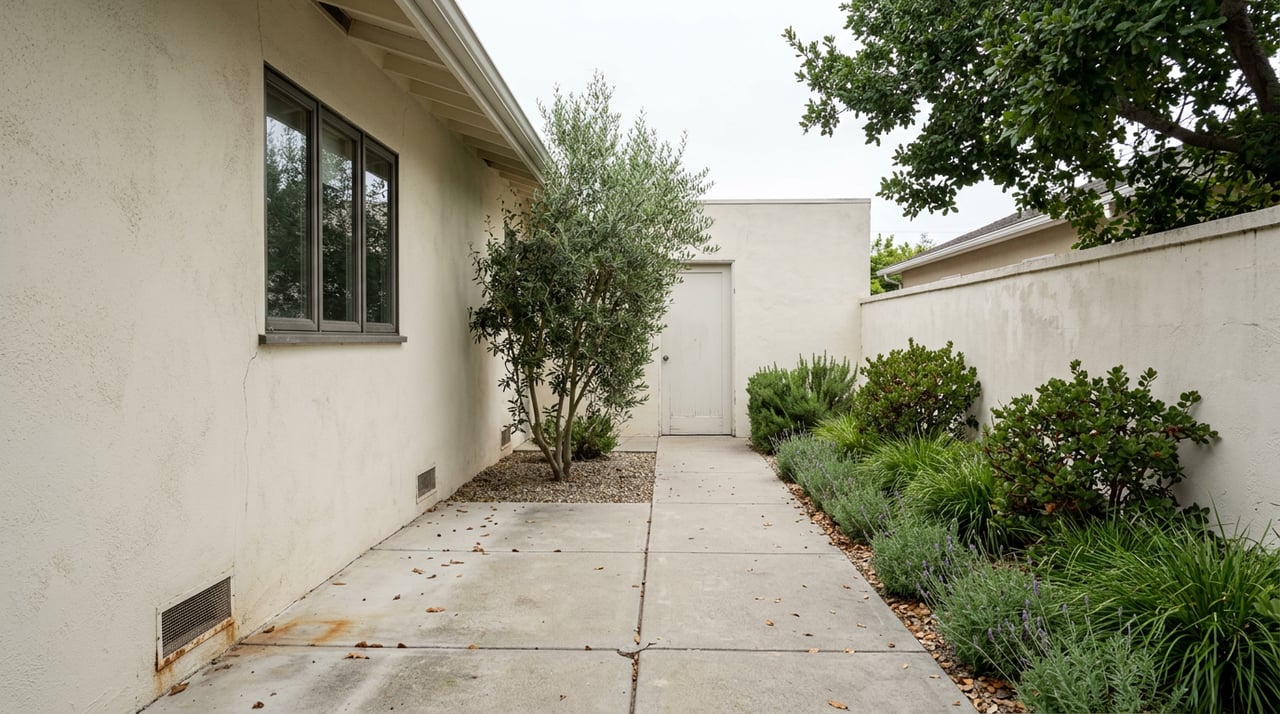
Cambrian Park's housing stock isn't a mix of eras the way some San Jose neighborhoods are. It's overwhelmingly one era: ranch-style tracts built through the 1950s and into the 1960s, when the area was developing as part of the postwar expansion of Silicon Valley's original workforce. That timing matters for two specific systems.
Homes built before or around 1960 typically have clay sewer laterals. Clay is rigid and brittle, and over 50 to 80 years the joints between sections loosen as soil shifts, tree roots find their way into every gap, and the pipe walls crack under ground pressure. Cast iron became the standard material in the 1970s, and plastic pipe from the 1980s forward tends to last the longest. A typical Cambrian Park ranch home from the 1950s is very likely running on the original clay line, now well past the point where that kind of pipe holds up reliably.
The supply plumbing tells a similar story. Galvanized steel pipe was standard in home construction until 1960 and has a typical lifespan of 50 to 70 years. Even copper installed in the 1960s can develop pinhole leaks after five decades of exposure to San Jose's hard water. Put plainly, Cambrian Park's underground systems are aging out at the same moment the city that governs them has no mechanism that forces anyone to check.
California law requires nearly every seller of residential property to complete a Transfer Disclosure Statement, and that requirement can't be waived even in an as-is sale. It sounds like a safety net. In practice, the TDS only requires a seller to disclose what they actually know, not what a professional camera inspection would find.
A seller who has lived in a Cambrian Park ranch for twenty years without a backup, a wet spot in the yard, or a plumber's visit has nothing to write down on that form, and hasn't broken any rule by leaving the box unchecked. An as-is clause changes what a seller is obligated to fix. It does not change what a seller is obligated to disclose, and it offers no protection for a defect the seller genuinely never knew existed. That principle goes back to the 1963 case Lingsch v. Savage, and California courts still apply it the same way today. A listing agent has an independent duty to visually inspect what's reasonably accessible, but a lateral running several feet under a front lawn isn't something even a careful walkthrough will catch.
The result is a legal system that works exactly as designed and still leaves a real gap: it protects buyers from concealment, but it does nothing to manufacture knowledge that was never generated in the first place.
San Jose splits lateral ownership at the property line. The homeowner is responsible for the upper lateral, the section running from the house to that line. The city takes over from there to the main. If the homeowner's stretch fails, whether that happens two months before a listing goes live or two years after a buyer closes, the repair cost belongs entirely to whoever owns the house when it happens.
That detail matters more than it sounds. A clean closing doesn't reset the age of the pipe. A buyer who closes on a Cambrian Park home with a seventy-year-old clay lateral inherits that pipe's age along with the deed, whether anyone mentioned it during the transaction or not.
Cambrian has been one of San Jose's more competitive submarkets through 2026, with turnkey homes routinely drawing multiple offers, selling within about two weeks, and closing above asking price. In that kind of market, buyers competing for a limited number of listings often shorten or waive inspection contingencies to make an offer more attractive.
That's a reasonable trade-off for cosmetic issues a buyer can see and price around. It's a much bigger gamble for a pipe that nobody, not the city, not the TDS, not a rushed weekend showing, is required to check before the sale.
Does San Jose require a sewer lateral inspection at any point? Not tied to a sale. Any new sewer connection or repair still requires a permit and inspection through the city's Development Services Department, and unpermitted work can affect insurance coverage down the line.
Who pays if the lateral fails right after closing? In San Jose, the upper lateral belongs to whoever owns the property when it fails. If that's a month after closing, it's the buyer's repair.
Does an as-is sale protect a seller from a bad sewer lateral? No. As-is changes repair obligations, not disclosure obligations, and it offers no cover if a seller knew about a problem and didn't say so.
Cambrian Park's charm is real: quiet streets, established trees, a housing stock built for families who planned to stay. That same age is exactly why a pipe nobody has to check is worth checking anyway. If you're weighing a sale or a purchase in Cambrian Park and want a clear-eyed read on what a specific property's systems, price position, and timeline actually look like, Theresa Van Zant & Tom Yore can walk through it with you before you list or write an offer.

Success starts with the right partnership. At the Yore | Van Zant Real Estate Group, we deliver personalized service, strategic insight, and results that move you forward.