Saratoga Homes for Sale & Luxury Neighborhood Guide
An elegant blend of heritage, luxury, and natural beauty nestled at the edge of Silicon Valley.
An elegant blend of heritage, luxury, and natural beauty nestled at the edge of Silicon Valley.
31,383 people live in Saratoga, where the median age is 51.3 and the average individual income is $124,255. Data provided by the U.S. Census Bureau.
Total Population
Median Age
Population Density Population Density This is the number of people per square mile in a neighborhood.
Average individual Income
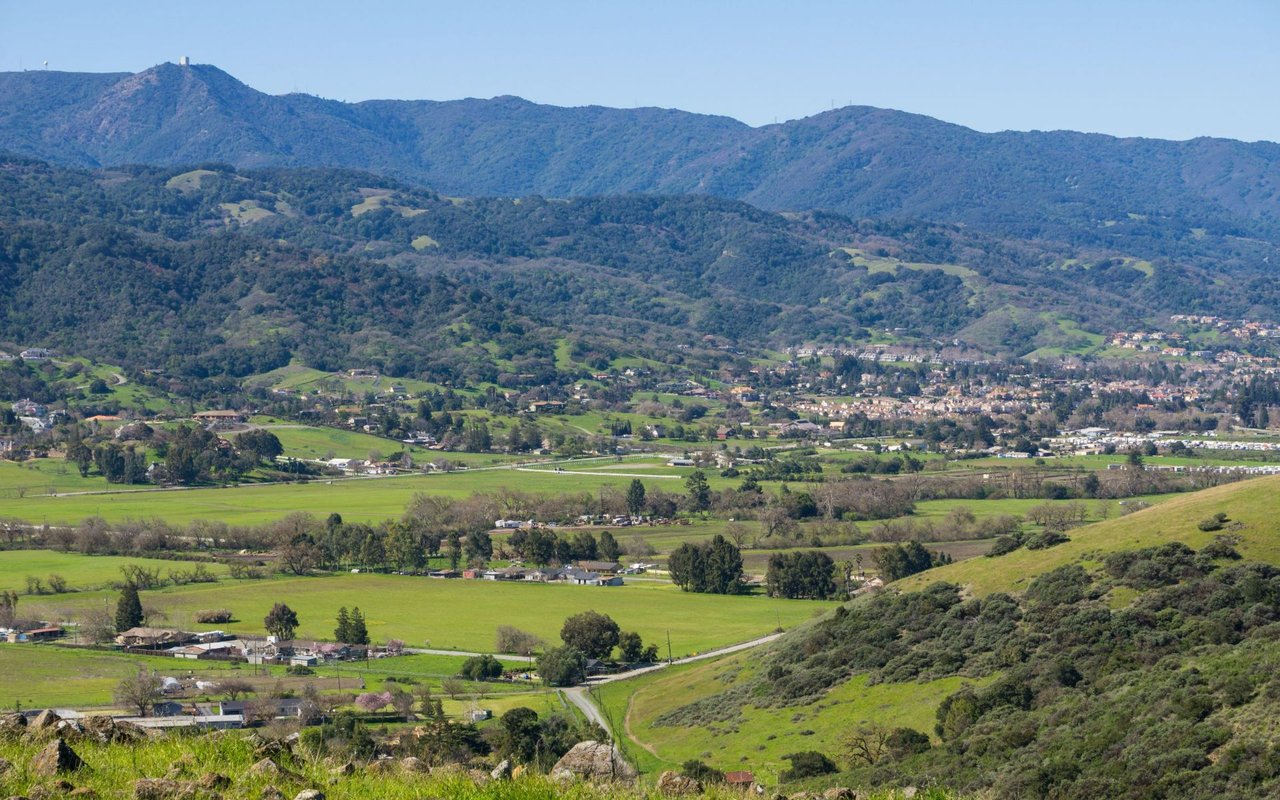
Saratoga sits in the foothills of the Santa Cruz Mountains in southwestern Santa Clara County, where the Silicon Valley grid gives way to oak-shaded hillside roads, larger lots, and a quiet that the valley floor rarely achieves. It is a city of about 30,000 residents across roughly 12 square miles, incorporated in 1956 specifically to resist annexation by San Jose and to preserve the character of a community its residents had already decided was worth protecting.
That founding instinct has shaped every decision since. Saratoga's General Plan reserved 86% of the city for residential use from the start. The downtown, called the Village, runs along Big Basin Way and has kept a low-scale, independent-shop character that chain retail has not meaningfully penetrated. The school system — anchored by Saratoga High School, which was ranked the number one college preparatory public high school in California by Niche in 2021 — is the reason most families give for choosing the city above comparable neighbors. And the open space, from the 175-acre Montalvo Arts Center grounds to the 68-acre Quarry Park to the trail networks threading into the Santa Cruz Mountains, gives residents an outdoor depth that most Silicon Valley communities cannot offer.
This guide covers the history, lifestyle, market data, schools, amenities, neighborhoods, and investment picture for Saratoga, California.
| Key Facts: Saratoga, CA | |
|---|---|
| County | Santa Clara County |
| Community Type | Incorporated city with a council-manager government |
| Location | Southwestern Santa Clara County, at the base of the Santa Cruz Mountains; approximately 12 miles southwest of downtown San Jose and 3 miles south of Cupertino |
| Population | Approximately 30,319–30,486 (2024 estimates); 2020 Census recorded 31,051 |
| City Area | 12.78 square miles; elevation approximately 423 feet |
| Median Age | 51.7 years |
| Median Household Income | $250,001 (2024 data); average household income $346,480 |
| Incorporated | October 22, 1956; named for Saratoga Springs, New York |
| Downtown | Historic Saratoga Village along Big Basin Way; includes historic buildings dating to the late 1800s |
| School Districts | Saratoga Union School District (TK–8); Los Gatos–Saratoga Union High School District (9–12); portions also served by Campbell Union High School District |
| ZIP Code | 95070 (city); 95071 (PO boxes) |
| Highway Access | State Route 85 (eastern boundary), Highway 9 (Saratoga–Los Gatos Road), Saratoga–Sunnyvale Road, Lawrence Expressway, I-280 (approximately 5 miles north) |
| Nearby Cities | Cupertino (north), San Jose (east), Campbell (east), Los Gatos (south), Monte Sereno (south), Los Altos Hills (northwest) |
Saratoga Lifestyle Snapshot
An editorial snapshot of the city's strongest lifestyle attributes, not a statistical ranking.
Saratoga has a demographic profile that stands apart even within Silicon Valley's high-income tier. The median household income of $250,001 and average household income of $346,480 rank it among the wealthiest cities in California. The median age of 51.7 years is notably high — the community skews toward established professionals and retirees rather than young families just arriving, and the homeownership rate of approximately 86% reflects a population that has largely settled in and has no immediate reason to leave.
The racial makeup is distinctive too: approximately 59.5% of residents identify as Asian, with a strong representation of South and East Asian households — largely reflecting the concentration of engineering and technology professionals working at nearby Apple, Google, Cisco, and Intel campuses. About 33% of residents identify as White. This demographic character shapes the community in visible ways, from the restaurants and specialty grocery options in the Village to the academic culture of the schools.
Saratoga incorporated in 1956 to prevent annexation by San Jose. That founding decision was not just political — it was a statement about what kind of community residents wanted to maintain. The General Plan established from the outset that Saratoga would be predominantly residential, low-density, and protective of its semi-rural character. Seven decades later, that founding intent is still legible in the zoning, the lot sizes, and the pace of daily life.
The Ohlone people inhabited the valleys and foothills of what is now Saratoga for thousands of years before Spanish missionaries arrived. The land later became part of the Mexican rancho system, and the first American settlers arrived in the 1840s and 1850s to find creek-watered flatlands and oak-covered hillsides that suited both agriculture and timber operations.
The area was originally called McCartysville after settler William McCartney, who built a sawmill on Saratoga Creek in 1847. The village that formed around the mill was renamed Saratoga in the 1860s after Saratoga Springs, New York, reportedly because the local mineral springs reminded settlers of those in the famous New York resort town. The South Pacific Coast Railroad reached the area in 1878, connecting the community to San Jose and transforming it from a remote settlement into a destination for summer visitors from the Bay Area. The warm microclimate and mountain backdrop made Saratoga a favored retreat for San Francisco and San Jose residents throughout the late 19th and early 20th centuries.
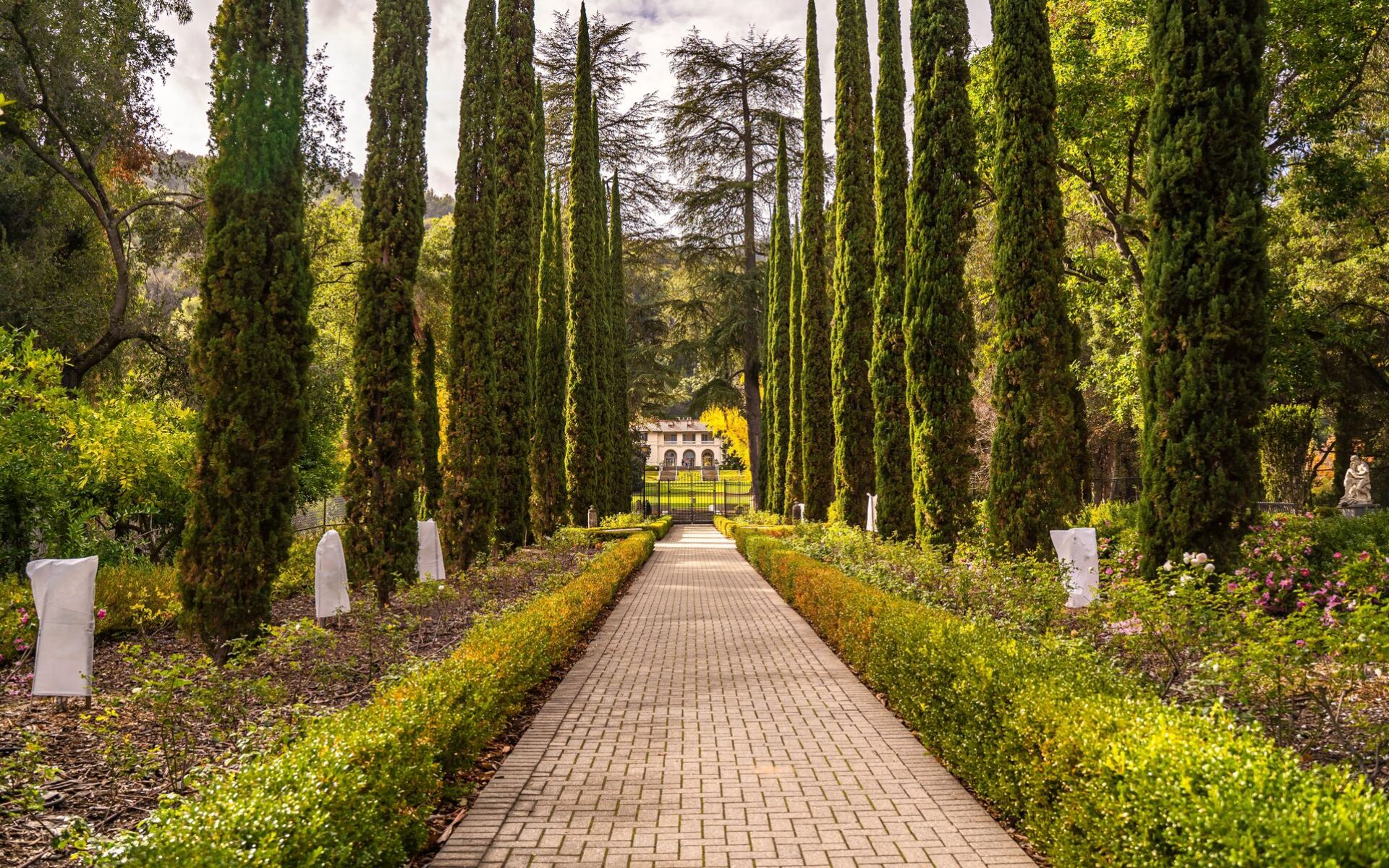
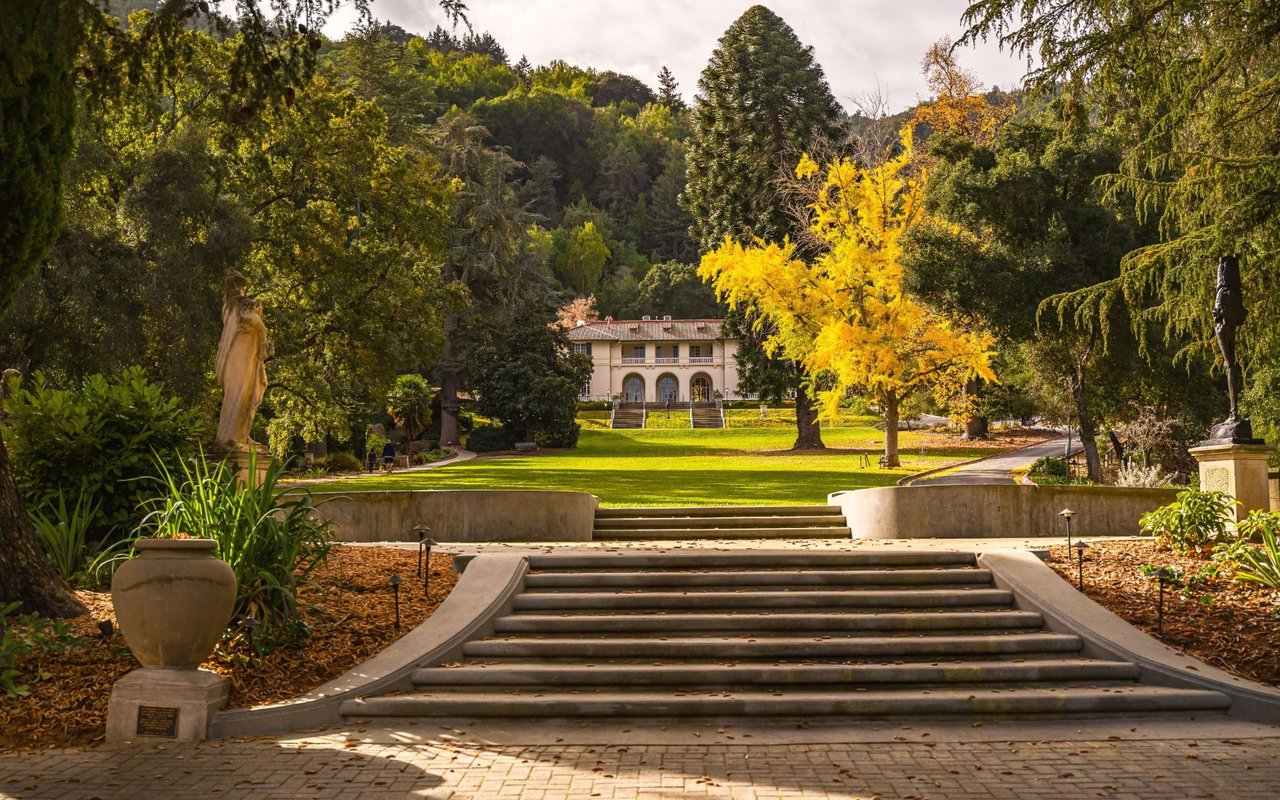
Villa Montalvo, built between 1912 and 1914 for James Duval Phelan — a former San Francisco mayor and U.S. Senator — became one of the region's most significant cultural landmarks. Phelan used the Italian Mediterranean Revival villa as a center for arts and political life until his death in 1930, at which point he bequeathed the estate to be maintained as a public park and arts center. The San Francisco Art Association assumed trusteeship and launched the country's third artist-in-residence program on the grounds in 1939. The Montalvo Arts Center, as it is now known, has welcomed more than 600 artists from 20 countries since that program began.
Saratoga remained a largely agricultural community through the 1940s, with orchards of prunes, apricots, and walnuts covering much of the flatland. The postwar population influx that transformed the rest of the Santa Clara Valley reached Saratoga in the 1950s. In 1956, alarmed by San Jose's aggressive annexation program spreading across the valley, Saratoga residents voted to incorporate as their own city. The first General Plan, designating 86% of the city for residential use, was established shortly after and has guided development ever since.
The Hakone Estate and Gardens, established in 1915, is one of the oldest Japanese gardens in the Western Hemisphere. Listed on the National Register of Historic Places and designated a "Save America's Treasures" site by the National Trust for Historic Preservation, the estate offers traditional Japanese architecture, koi ponds, tea ceremonies, cultural classes, and seasonal festivals. It served as a filming location for the movie Memoirs of a Geisha.
Saratoga's position in the southwestern corner of Santa Clara County places it within practical range of several of Silicon Valley's most significant employment campuses. State Route 85 runs along the city's eastern boundary, providing quick access north toward Cupertino and Apple's headquarters at Apple Park (approximately 5 to 10 minutes), and east toward Mountain View and Google (approximately 20 to 28 minutes). Saratoga–Sunnyvale Road provides a surface connector north toward Cupertino and I-280. Highway 9 (Saratoga–Los Gatos Road) connects south and east toward Los Gatos and the Highway 17 interchange.
| Destination | Approximate Distance / Time | Route |
|---|---|---|
| Apple Park (Cupertino) | 5 miles / 8–14 min | SR-85 north to De Anza Boulevard, or Saratoga–Sunnyvale Road north |
| Downtown San Jose | 12 miles / 18–28 min | SR-85 east to Highway 87, or Saratoga Avenue east to downtown |
| Mountain View / Google | 16 miles / 22–30 min | SR-85 north to Highway 101 north |
| Los Gatos (downtown) | 5 miles / 10–16 min | Highway 9 east (Saratoga–Los Gatos Road) |
| Campbell (downtown) | 6 miles / 10–16 min | Highway 9 east to Los Gatos Boulevard north, or local streets |
| Mineta San Jose International Airport | 15 miles / 20–28 min | SR-85 east to Highway 87 north |
| I-280 (north toward San Francisco) | 5 miles / 8–12 min | Saratoga–Sunnyvale Road north or Saratoga Avenue north to I-280 |
| San Francisco | 50 miles / 55–75 min | SR-85 north to I-280 north |
The average commute time for Saratoga residents is approximately 27 minutes. Public transit options are limited for a city of Saratoga's footprint — VTA bus routes serve major corridors, and the city is car-dependent for most daily needs. Residents commuting to Apple, Cisco, or Intel in Cupertino and Santa Clara benefit from the SR-85 connection, and those heading to the Peninsula use I-280 as their primary route. The relatively straightforward highway geometry for northbound tech commutes is one reason the city draws heavily from the engineering and professional workforce at those campuses.
Saratoga operates at or near the top of Silicon Valley's residential price hierarchy. Median sale prices for single-family homes range from roughly $2.8 million near the Village to well above $5 million for larger hillside estates, and the median list price for the city has hovered near $5 million at certain points in 2025. The market is driven almost entirely by single-family detached homes on large lots — condos and townhomes are rare, and the city's land use policies keep it that way.
| Property Segment | Market Character | Buyer Consideration |
|---|---|---|
| Golden Triangle flat single-family | Most in-demand area; flat terrain; strong school access; lower fire risk zone as of 2025 update | Prices typically $3M–$5M+; multiple offers on well-priced listings; school zone is primary driver |
| Saratoga Village vicinity | Walk-to-Village premium; historic character; smaller lots than outer areas | Median around $2.8M–$3.3M; fastest-selling sub-market; 8-day median days-on-market in some periods |
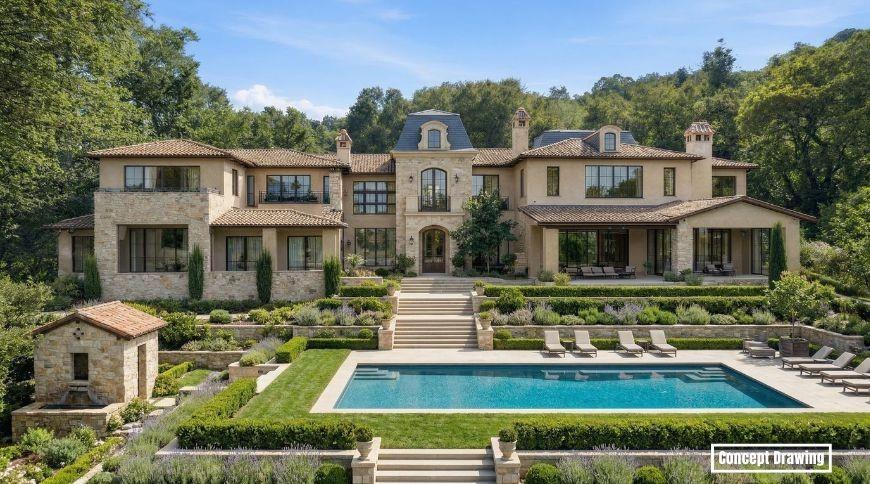
| Hillside and foothill estates | Larger lots, acreage, privacy, mountain views; slower pace of transactions | $4M–$8M+ range; fire insurance and road access are critical due diligence items; more negotiating room than flat areas |
| Prides Crossing / northern Saratoga | Commute-friendly location near SR-85; family-oriented; average home ~2,400 sq ft on ~12,500 sq ft lot | Well-suited for Apple and tech campus commuters; slightly more accessible pricing than Golden Triangle |
| Prospect Road corridor (Campbell Union HS zone) | Northern Saratoga; served by Campbell Union High School District rather than Los Gatos–Saratoga HSD | Lower prices than Saratoga High zone; school district assignment is a meaningful price differentiator here |
Saratoga's market has been moderating from 2022 peak levels but remains firmly a seller's market for well-located single-family homes. In late 2025, most sub-markets showed homes selling at or slightly below list price — a departure from the frenetic above-list conditions of 2021–2022 — but days on market remain moderate and transaction volume is healthy. The hillside and estate segments take longer to clear, reflecting the smaller buyer pool at those price points and the additional due diligence that hillside fire risk, access roads, and insurance require.
School district assignment drives more pronounced price variation in Saratoga than in almost any other South Bay community. Homes zoned for Saratoga High School (Los Gatos–Saratoga HSD) consistently command a meaningful premium over otherwise comparable properties zoned for Prospect High School (Campbell Union HSD) on the northern edge of the city. Buyers should verify district assignment by exact address before drawing price comparisons.
Saratoga has a pace that is unusual for a city this close to the center of Silicon Valley. The streets are quiet, the lots are large, and the prevailing social culture prizes privacy alongside community. It is not a place people move to for nightlife or urban energy — it is a place people move to when they have decided that the quality of their children's education, the size of their yard, and the proximity of hiking trails matter more than proximity to bars and concert venues. That choice attracts a specific kind of resident, and those residents tend to stay.
The downtown along Big Basin Way is a genuine village-scale commercial district with independent restaurants, wine bars, art galleries, and specialty shops in buildings that date to the late 1800s and early 1900s. The Saratoga Farmers Market runs seasonally, offering local produce and artisan goods. Parking improvement construction began in 2025 to enhance the streetscape and walkability.
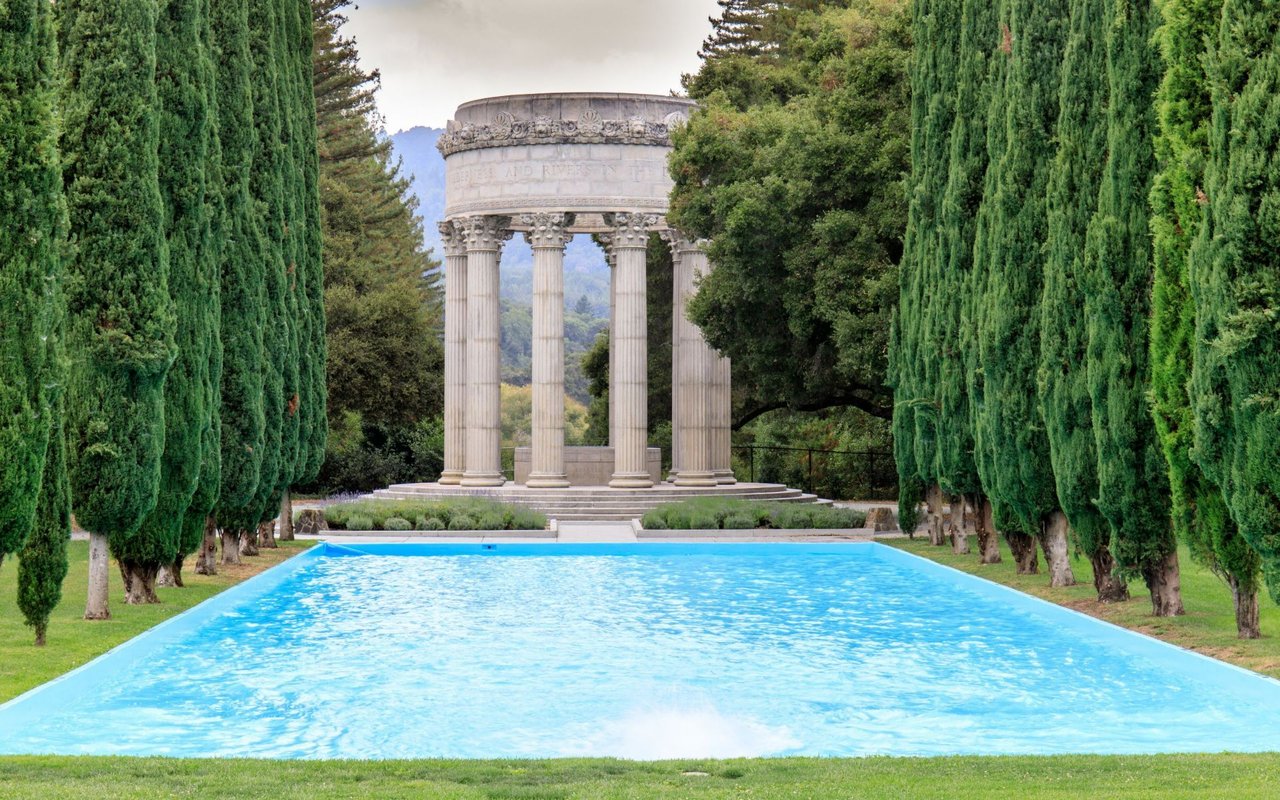
A 175-acre estate and nonprofit arts center in the foothills above Saratoga, centered on the Italian Mediterranean Revival Villa Montalvo built in 1912–1914. Open to the public year-round, the grounds include formal gardens, hiking trails, an arboretum, and outdoor and indoor performance venues. The Sally and Don Lucas Artists Residency Program has hosted over 600 artists from 20 countries since 1939. Listed on the National Register of Historic Places.
One of the oldest Japanese gardens in the Western Hemisphere, established in 1915 on a hillside above Saratoga. The estate offers traditional Japanese architecture, koi ponds, bridges, a tea house, cultural classes including tea ceremony and ikebana, and seasonal festivals. Listed on the National Register of Historic Places and designated a National Trust "Save America's Treasures" site.
Saratoga maintains 15 city parks plus trail connections into regional open space. Quarry Park at 68 acres is the largest, offering miles of hiking and mountain biking through oak woodland. The city's trail network connects to the Santa Cruz Mountains, Sanborn County Park, and Castle Rock State Park for more challenging backcountry access.
A historic winery and outdoor concert venue set in the mountains above Saratoga. Mountain Winery's summer and fall concert series draws national touring acts to a setting of vineyard terraces and Santa Clara Valley views — one of the most distinctive outdoor performance venues in Northern California.
A community college located within Saratoga at 14000 Fruitvale Avenue, offering associate degrees, transfer programs, workforce development, and continuing education. West Valley College awarded 2,135 degrees in 2023 and serves Saratoga residents and surrounding communities as a local higher education resource without requiring a commute to San Jose.
Saratoga's amenity base is weighted toward quality over quantity. The Village provides dining and specialty retail at a scale consistent with a city of 30,000 rather than a major urban destination. Grocery, healthcare, and everyday services are accessible within the city and in immediately adjacent Cupertino and Campbell. For higher-end retail, Santana Row and Westfield Valley Fair in San Jose are about 20 minutes east, and the Pruneyard in Campbell is less than 15 minutes away.
| Category | What's Available |
|---|---|
| Grocery | Lunardi's Market on Saratoga Avenue (independently owned, long-established local grocer); Safeway and Nob Hill nearby; specialty Asian grocery markets within 5–10 minutes in Cupertino along De Anza Boulevard; Whole Foods and Trader Joe's accessible in adjacent cities |
| Dining | Big Basin Way in the Village offers Japanese, Italian, French, and American dining options; Plumed Horse (Michelin-starred fine dining); Sent Sovi (fine dining); local wine bars and cafes; seasonal restaurant additions align with the Farmers Market calendar; broader selection in Campbell and Los Gatos within 15 minutes |
| Healthcare | El Camino Health facilities accessible in Mountain View and Los Gatos; Good Samaritan Hospital (San Jose) via SR-85; Kaiser Permanente Santa Clara campus accessible in approximately 20 minutes; multiple physician groups and specialty practices along Saratoga Avenue and Fruitvale Avenue |
| Shopping | Independent boutiques and galleries in the Village; Westgate Shopping Center for everyday retail; Santana Row and Westfield Valley Fair (approximately 20 min east) for premium retail; The Pruneyard in Campbell (approximately 15 min) for dining and shopping |
| Recreation | Quarry Park (68 acres), Wildwood Park, Congress Springs Park, 15 city parks total, Montalvo Arts Center grounds (175 acres of trails and gardens), Hakone Estate, Sanborn County Park, Castle Rock State Park, trail connections to Santa Cruz Mountains |
| Arts & Culture | Montalvo Arts Center (galleries, concerts, residency program, outdoor performances), Hakone Estate (cultural events, tea ceremonies, festivals), Mountain Winery (outdoor concerts), Saratoga History Museum and Park, Saratoga Federated Church (historic landmark), West Valley College performing arts programs |
Plumed Horse on Big Basin Way has held a Michelin star and is one of the most recognized fine dining destinations in the South Bay. The Village's dining scene, while compact, draws from across Silicon Valley — it is common to encounter residents from Cupertino, Los Gatos, and Los Altos Hills at Saratoga Village restaurants on weekends, which reflects the quality of what the Village offers relative to its size.
Saratoga's residential geography divides naturally into the flat areas closer to SR-85 and the tech corridor, the Village-adjacent historic core, the eastern neighborhoods bordering Campbell and San Jose, and the hillside and foothill areas rising toward the Santa Cruz Mountains. Each section has a distinct character, price range, and school zone profile.
A large, predominantly flat area bounded by Cox Avenue, Saratoga–Sunnyvale Road, and Saratoga Avenue. Consistently the most in-demand residential area in the city, with strong Saratoga school zone access, relatively flat lots well-suited for large home footprints, and proximity to SR-85 for tech commutes. As of the 2025 Cal Fire map update, the Golden Triangle is outside designated fire hazard severity zones, a meaningful practical and insurance benefit.
The historic core around Big Basin Way and the immediate surrounding streets. The most walkable part of the city, with access to the Farmers Market, Village restaurants, and the Saratoga History Museum on foot. Homes here tend to be older and on smaller lots than outer areas but carry the walk-to-Village premium that a segment of buyers specifically seeks. Fastest average days on market in the city.
A well-regarded neighborhood in northern Saratoga with a strong community identity, good access to SR-85 for tech commuters, and homes averaging approximately 2,400 square feet on 12,500 square foot lots built primarily in the early 1960s and 1970s. Popular with Apple and Cisco employees who value the commute access without sacrificing Saratoga school district assignment.
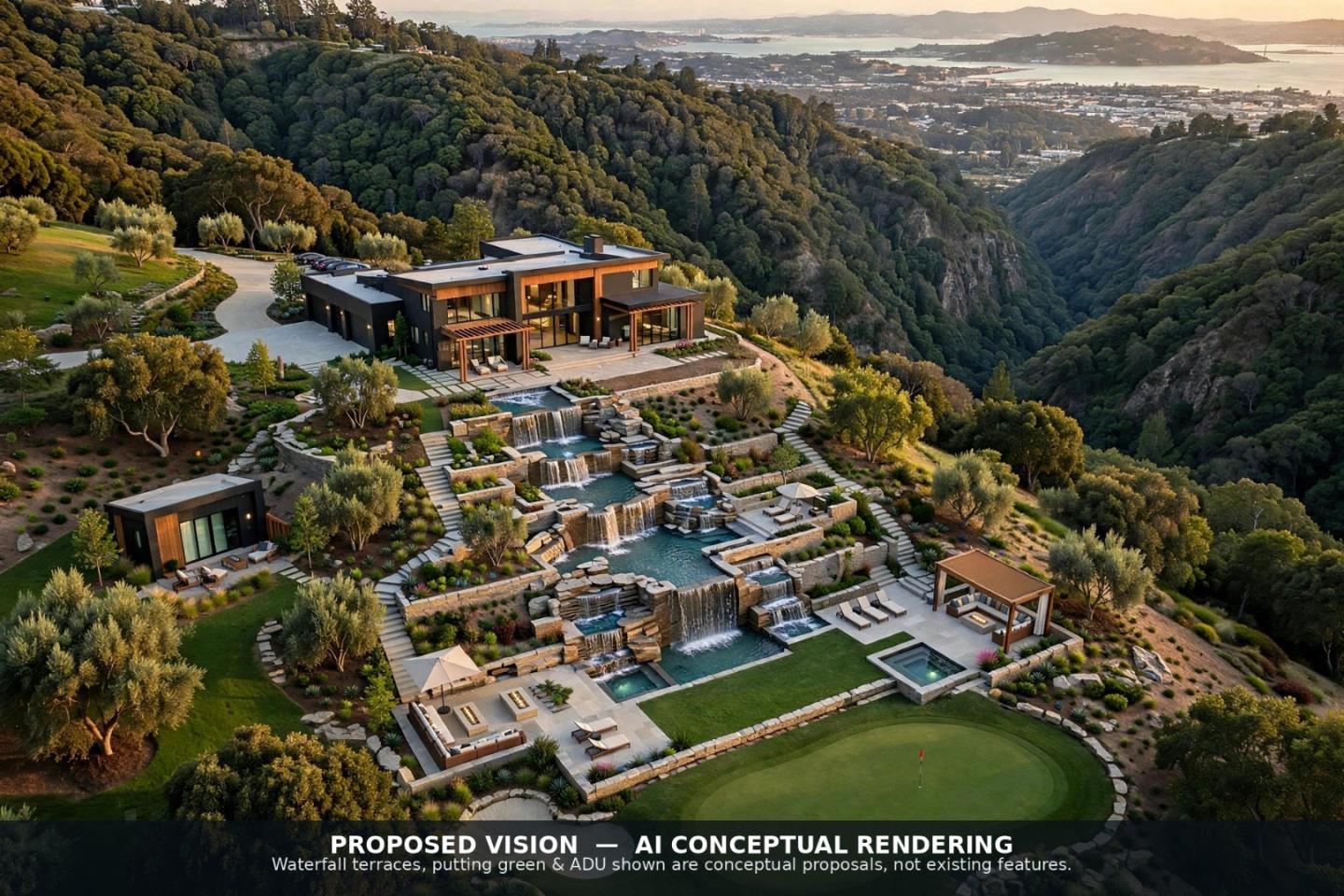
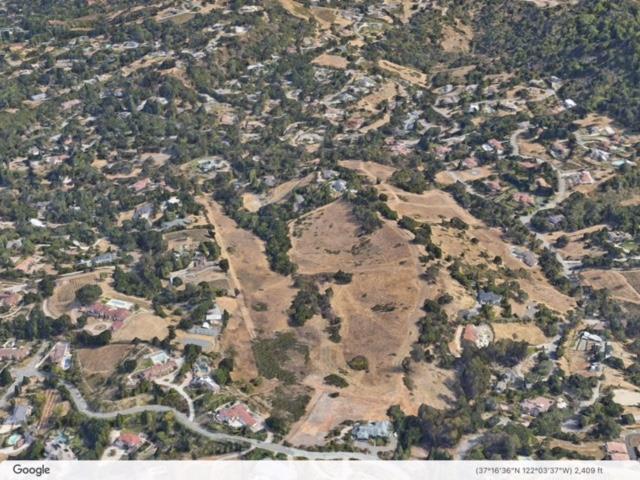
The areas above the city floor rising toward the Santa Cruz Mountains contain larger properties, often with significant acreage, privacy, and long-range views. These include Vineyards, Parker Ranch, and other foothill addresses. A narrower buyer pool, longer marketing times, and higher due diligence requirements for fire risk and road access are characteristic. The trade is privacy and land at a scale unavailable at lower elevations.
The northeastern portion of Saratoga along Prospect Road borders Campbell and falls within the Campbell Union High School District for high school rather than the Los Gatos–Saratoga HSD. This zoning distinction drives a meaningful price discount relative to Saratoga High school-zoned properties. Prospect High School, the CUHSD high school serving this area, is a solid campus but does not carry the same national ranking as Saratoga High.
Mid-city neighborhoods with good access to West Valley College, Wildwood Park, and the primary commercial corridors. Balanced location between the Village character of the west and the commute-oriented north, and typically within the Saratoga Union School District zone. A practical choice for families who want Saratoga school access without the highest price points of the Golden Triangle.
| Neighborhood | Character | Best For |
|---|---|---|
| Golden Triangle | Flat, large lots, top school zone, lower fire risk | Families prioritizing Saratoga school access and tech commute convenience; the city's most competitive sub-market |
| Saratoga Village Area | Historic, walkable, Village-adjacent | Buyers who want walkable access to dining and the Farmers Market; older homes on smaller lots at a walkability premium |
| Prides Crossing | Community-oriented, commuter-friendly, 1960s–1970s homes | Apple/Cisco commuters; families wanting Saratoga school zone with slightly more accessible pricing |
| Hillside Estates | Acreage, privacy, mountain views, fire risk awareness required | Buyers seeking land, privacy, and natural setting; narrower market; thorough fire insurance due diligence essential |
| Eastern Saratoga / Prospect Road | Affordable entry into Saratoga; Campbell Union HSD zone | Buyers who want the Saratoga address and elementary school access at a lower price point; high school district differs |
| Blue Hills / Fruitvale | Mid-city, balanced, West Valley College proximity | Families wanting Saratoga Union SD access without the highest Golden Triangle pricing |
The school system is the foundational reason most families choose Saratoga over comparable communities at similar price points. The Saratoga Union School District serves grades TK–8 with 90% math proficiency and 86% reading proficiency by state test scores — among the highest elementary district performance levels in California. For high school, most Saratoga students attend Saratoga High School within the Los Gatos–Saratoga Union High School District, ranked the best school district in California by SchoolDigger, with Saratoga High itself holding the number one ranking for college preparatory public high schools in California from Niche in 2021.
| School / District | Type / Grades | Notes |
|---|---|---|
| Saratoga Union School District | Public TK–8; 1,653 students; established 1865 | 90% math proficiency, 86% reading proficiency per state tests; 21:1 student-teacher ratio; Niche A-minus; one of the highest-performing elementary districts in California |
| Saratoga Elementary School | Public K–5; Saratoga Union SD | The primary elementary school in the city's core; committed to challenging students at every level; serves the Village and central Saratoga residential areas |
| Redwood Middle School | Public 6–8; Saratoga Union SD | The primary middle school for Saratoga Union SD students; committed to a safe, diverse educational environment; feeds directly into Saratoga High School |
| Saratoga High School | Public 9–12; Los Gatos–Saratoga Union HSD; enrollment 1,161 (2024–25) | Ranked #1 best college preparatory public high school in California by Niche (2021); ranked #23 in the U.S. for STEM; four-year Project Lead the Way engineering program; 19:1 student-teacher ratio; 2024 graduating class included 33 National Merit Semifinalists; part of the best-ranked school district in California |
| Prospect High School | Public 9–12; Campbell Union High School District; enrollment 1,492 (2023–24) | Serves portions of northeastern Saratoga along the Prospect Road corridor; solid campus but carries a lower ranking than Saratoga High; the school district difference drives meaningful price variation in eastern Saratoga neighborhoods |
| West Valley College | Community college, Associate degrees; located at 14000 Fruitvale Ave, Saratoga | Awarded 2,135 degrees in 2023; serves Saratoga and surrounding communities; provides local higher education access for residents without requiring a San Jose commute |
Private school options are available within Saratoga and in neighboring Cupertino, Los Altos Hills, and San Jose. The concentration of high-achieving students and academically competitive households in Saratoga creates a peer environment that many families describe as a significant factor in their satisfaction with the public school system. For families considering relocation, verifying elementary school assignment by specific address within the Saratoga Union School District zone is essential, as boundaries exist and matter.
Saratoga High School's 2024 graduating class produced 33 National Merit Semifinalists. The school's four-year Project Lead the Way engineering program, open-access AP curriculum, and 19:1 student-teacher ratio reflect a school designed for students who intend to attend selective universities. The academic culture of the school is shaped significantly by the household income and professional background of the parent community — a self-reinforcing dynamic that has sustained the school's performance over decades.
Saratoga holds a distinctive position in Silicon Valley's real estate investment landscape. It is not primarily a momentum market — prices do not spike and crash with the tech cycle as dramatically as some neighboring cities. It is instead a quality market held up by structural scarcity, the best elementary-to-high-school public education pipeline in California, and a demographic of high-earning, long-tenured homeowners who have little financial incentive to sell. That combination produces a market that appreciates consistently over long periods and defends its value during downturns better than most Bay Area communities.
| Market Snapshot (Late 2025) | |
|---|---|
| Median sale price (Nov 2025) | $3,422,500 |
| Median 12-month sale price | ~$4,001,000 |
| Median list price at peak | ~$4,998,000 (Jan 2025) |
| Median days on market | 85 days (Nov 2025) |
| Median property value (2024) | $2,000,000 |
| Investment Fundamentals | |
|---|---|
| Median gross rent (2024) | $3,481/month |
| Homeownership rate | 86.4% |
| Primary employer proximity | Apple HQ 5 min, Google 22 min, Cisco 20 min |
| School premium driver | Saratoga High zone vs. Campbell Union HSD zone creates significant price differential |
| Supply constraint | 86% residential zoning since 1956; large lots; minimal infill opportunity |
The school district premium is the most mechanically reliable investment driver in Saratoga real estate. Homes within the Saratoga High School attendance zone consistently trade above comparable properties zoned for Prospect High, sometimes by $500,000 or more on comparable square footage and lot size. For investors and primary residence buyers alike, confirming that the specific address is within the Los Gatos–Saratoga Union High School District zone is the single most important pre-purchase verification in this market.
Fire risk is a real consideration for hillside and foothill properties in Saratoga. Cal Fire's 2025 map update removed the Golden Triangle from designated fire hazard severity zones — a meaningful change for insurance access and costs in that area. Buyers evaluating properties above the city floor should research Cal Fire zone designations, homeowners insurance availability, and access road conditions as part of standard due diligence. These factors can have a significant impact on total cost of ownership in the hillside segments.
Buyers who choose Saratoga have typically already narrowed their search considerably. They know they want the school system. They have usually compared Los Gatos and found that Saratoga offers comparable academic outcomes at prices that, while still high, sometimes represent better value on a price-per-square-foot basis for larger lots. They have often decided that proximity to Apple or Cisco matters more than proximity to downtown San Jose. And they have accepted that Saratoga's pace is slower than most of Silicon Valley — and decided that is the point.
A complete K–12 public education pipeline that is arguably the strongest in California — Saratoga Union SD's 90% math proficiency and Saratoga High's #1 California college prep ranking represent the full spectrum. For families who have priced private school into their budget, the Saratoga public system often delivers superior academic outcomes at a fraction of the tuition cost.
Apple Park is 5 to 10 minutes north via SR-85. Cisco, Intel, and major semiconductor and tech campuses in Cupertino and Santa Clara are within 20 minutes. Saratoga is one of the most practical residential choices for senior Apple employees who want the school system, the lot size, and a commute that does not consume the morning.
Saratoga's residential character — large lots, low density, quiet streets — is rare in Silicon Valley at any price. The city's founding instinct to protect its semi-rural character has been maintained through seven decades of growth pressure from surrounding cities. Residents get more land and more privacy than any comparable address on the valley floor.
The Montalvo Arts Center, Mountain Winery concerts, Hakone Gardens festivals, and the Village's gallery and dining scene give Saratoga a cultural depth that residential-only communities typically lack. For buyers who want the quiet residential pace and genuine arts programming, Saratoga offers both without requiring a trip to San Francisco.
Structural supply constraint, the highest school district ranking in California, and a buyer pool anchored by the highest-earning professional segment in Silicon Valley create a market that has consistently rewarded patient long-term holders. Saratoga is not a trade — it is a hold.
Saratoga repeatedly surprises buyers relocating from New York or Chicago who expect Silicon Valley to be dense, corporate, and characterless. The oak-shaded streets, the village-scale downtown, the mountain trails from the back of the lot, and the school quality typically exceed expectations. The price does not.
What is Saratoga known for?
Saratoga is known primarily for its school system — anchored by Saratoga High School, California's top-ranked college preparatory public high school — and for its large-lot residential character, low density, and semi-rural feel in the foothills of the Santa Cruz Mountains. It is also known for the Montalvo Arts Center, the Hakone Japanese Gardens, the historic Saratoga Village, the Mountain Winery concert venue, and consistently being ranked one of the best places to live in California.
How does Saratoga compare to Los Gatos and Cupertino?
All three are premium Santa Clara County communities with excellent schools and high property values. Los Gatos has a more walkable historic downtown and a slightly more robust dining scene, but both share the Los Gatos–Saratoga High School District. Cupertino is denser, closer to Apple's campus, and has strong public schools through the Fremont Union High School District — but it lacks Saratoga's lot sizes, open space depth, and village character. Saratoga generally offers more land and privacy at prices that can be comparable to or slightly lower per square foot than the most expensive Los Gatos or Cupertino addresses.
What are the schools like in Saratoga?
The Saratoga Union School District reports 90% math proficiency and 86% reading proficiency by state tests, placing it among California's highest-performing elementary districts. Saratoga High School is part of the Los Gatos–Saratoga Union High School District, ranked the best school district in California by SchoolDigger. Saratoga High was ranked #1 best college preparatory public high school in California by Niche in 2021 and #23 in the U.S. for STEM. The 2024 graduating class produced 33 National Merit Semifinalists.
What is the Saratoga Village?
Historic Saratoga Village is the city's downtown district, located along Big Basin Way off Highway 9. It contains independent restaurants, wine bars, art galleries, boutiques, coffee shops, and the Saratoga Farmers Market. The buildings date primarily to the late 1800s and early 1900s, giving the Village a historic character that differentiates it from the strip-mall commercial corridors that define most Silicon Valley downtowns. Parking improvements were under construction in 2025.
What is the price range for homes in Saratoga?
The median sale price in November 2025 was approximately $3.42 million for all home types, with the median 12-month sale price around $4 million. Single-family homes in the Golden Triangle and Saratoga High school zone typically range from $3 million to $6 million depending on size and condition. Hillside estate properties with acreage can reach $8 million and above. Homes in the eastern Saratoga corridor zoned for Campbell Union High School District are generally priced $500,000 to $1 million below comparable properties in the Saratoga High zone.
What is the commute like from Saratoga?
Apple Park in Cupertino is approximately 5 to 10 minutes north via SR-85 or Saratoga–Sunnyvale Road. Google in Mountain View is approximately 22 to 30 minutes via SR-85 to Highway 101. Downtown San Jose is approximately 18 to 28 minutes east. The average commute time for Saratoga residents is about 27 minutes. Public transit is limited, and most residents drive. I-280 toward San Francisco is accessible in approximately 8 to 12 minutes via Saratoga–Sunnyvale Road north.
Is fire risk a concern in Saratoga?
It depends significantly on location. Cal Fire's 2025 map update removed the Golden Triangle — the most sought-after flat residential area — from designated fire hazard severity zones, which is meaningful for insurance access and cost. Hillside and foothill properties above the city floor carry higher fire risk and require more careful due diligence regarding Cal Fire zone designation, homeowners insurance availability, and access road conditions. Buyers evaluating mountain or hillside properties should treat fire insurance and access as primary due diligence items, not secondary ones.
What is the Montalvo Arts Center?
The Montalvo Arts Center is a 175-acre nonprofit arts center in the hills above Saratoga, centered on Villa Montalvo, an Italian Mediterranean Revival mansion built in 1912–1914 for U.S. Senator James Duval Phelan. Phelan bequeathed the estate as a public park and arts center upon his death in 1930. The grounds include formal gardens, hiking trails, an arboretum, gallery space, and outdoor and indoor performance venues. The Sally and Don Lucas Artists Residency Program has hosted over 600 artists from 20 countries since 1939. The estate is listed on the National Register of Historic Places and is open to the public year-round at no entrance fee.
There's plenty to do around Saratoga, including shopping, dining, nightlife, parks, and more. Data provided by Walk Score and Yelp.
Explore popular things to do in the area, including Nabilz Cheesecake, Azule Crossing Center, and Park Saratoga.
| Name | Category | Distance | Reviews |
Ratings by
Yelp
|
|---|---|---|---|---|
| Dining | 2.72 miles | 0 reviews | 0/5 stars | |
| Shopping | 2.43 miles | 0 reviews | 0/5 stars | |
| Shopping | 2.71 miles | 0 reviews | 0/5 stars | |
| Active | 1.57 miles | 0 reviews | 0/5 stars | |
| Active | 1.89 miles | 0 reviews | 0/5 stars | |
| Active | 2.01 miles | 3 reviews | 5/5 stars | |
| Active | 2.21 miles | 1 review | 5/5 stars | |
| Active | 2.61 miles | 6 reviews | 3.7/5 stars | |
| Active | 2.77 miles | 6 reviews | 5/5 stars | |
| Nightlife | 0.82 miles | 0 reviews | 0/5 stars | |
| Beauty | 0.84 miles | 0 reviews | 0/5 stars | |
| Beauty | 0.84 miles | 6 reviews | 5/5 stars | |
| Beauty | 0.89 miles | 0 reviews | 0/5 stars | |
| Beauty | 0.91 miles | 0 reviews | 0/5 stars | |
| Beauty | 1.55 miles | 2 reviews | 5/5 stars | |
| Beauty | 2.43 miles | 0 reviews | 0/5 stars | |
| Beauty | 2.46 miles | 10 reviews | 5/5 stars | |
| Beauty | 2.73 miles | 0 reviews | 0/5 stars | |
|
|
||||
|
|
||||
|
|
||||
|
|
||||
|
|
||||
|
|
Saratoga has 11,124 households, with an average household size of 2.8. Data provided by the U.S. Census Bureau. Here’s what the people living in Saratoga do for work — and how long it takes them to get there. Data provided by the U.S. Census Bureau. 31,383 people call Saratoga home. The population density is 1,108 and the largest age group is Data provided by the U.S. Census Bureau.
Total Population
Population Density Population Density This is the number of people per square mile in a neighborhood.
Median Age
Men vs Women
Population by Age Group
0-9 Years
10-17 Years
18-24 Years
25-64 Years
65-74 Years
75+ Years
Education Level
Total Households
Average Household Size
Average individual Income
Households with Children
With Children:
Without Children:
Marital Status
Blue vs White Collar Workers
Blue Collar:
White Collar:
Success starts with the right partnership. At the Yore | Van Zant Real Estate Group, we deliver personalized service, strategic insight, and results that move you forward.