What a $109 Million Vineyard Sale Just Taught Saratoga About Its Own Zoning
September 3, 2026
September 3, 2026
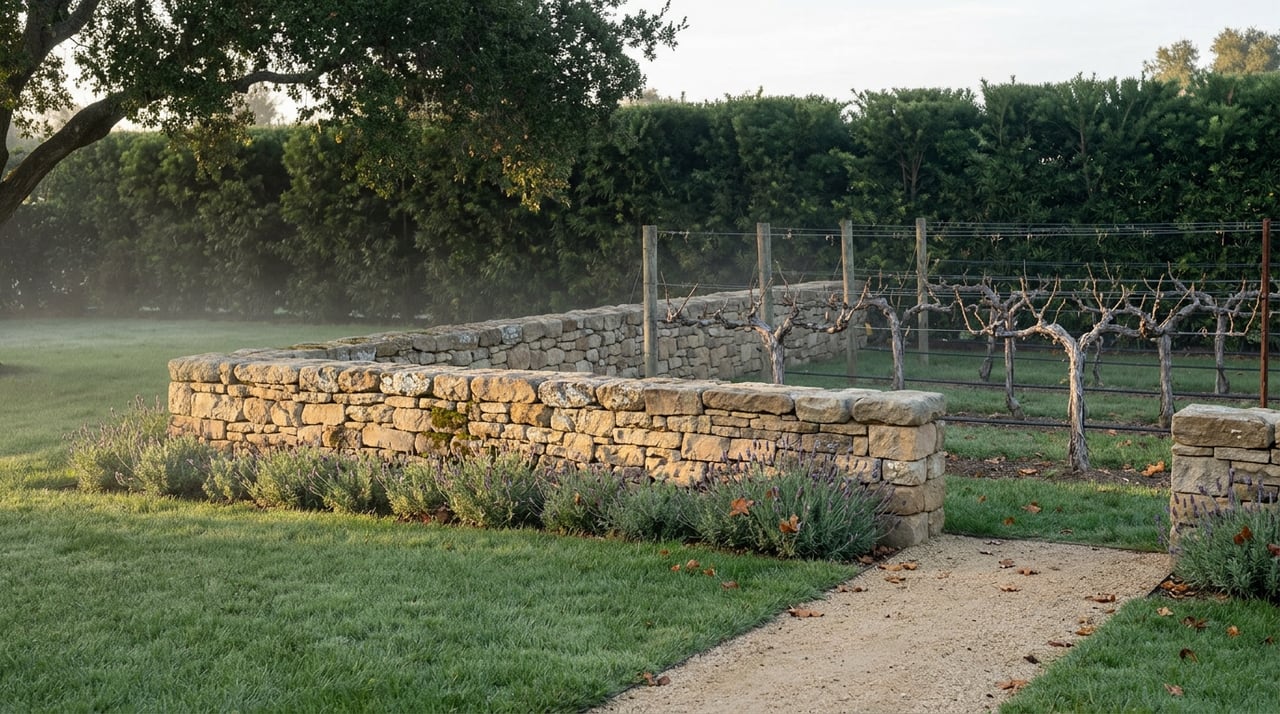
For more than a century, a Bellicitti family vineyard sat on the corner of Chester Avenue and Allendale Avenue, a working parcel of just over eleven and a half acres inside one of Saratoga's most established hillside pockets. Then, in roughly three years, that same ground went from a working vineyard to a $109.7 million land sale to a construction site where Lennar Homes is now pulling grading permits. The vines didn't change. What changed was a piece of paper the city files with the state.
That distinction matters if you own, or are shopping for, anything in Saratoga described as agricultural, vineyard-zoned, or sitting inside an "AP" preserve. The Chester Avenue story isn't really about wine grapes. It's about what a Williamson Act contract is actually worth once a city's housing paperwork falls out of step with state law, and how fast that value can move once it does.
A Williamson Act contract is supposed to be one of the more permanent things a property can carry. Landowners agree to keep land in agricultural or open-space use, and in exchange the county taxes it on farm income rather than market value. The contract renews automatically every January 1, and the standard exit is a nine-year phase-out once a party files notice of non-renewal. Straight cancellation is meant to be rare, reserved for extraordinary circumstances. Santa Clara County currently has more than 362,000 acres enrolled this way, close to 43 percent of the county's land area, so the assumption that "agricultural preserve" means the land is functionally frozen isn't unreasonable. It's just incomplete.
What the Chester Avenue parcel shows is that the contract's real durability depends on something the property owner doesn't control: whether the host city's housing element is currently certified by the state. California's Builder's Remedy law lets a developer bypass local zoning entirely if a city hasn't adopted a state-compliant housing plan. Saratoga's housing element wasn't certified by the California Department of Housing and Community Development until July 8, 2024. The original application for the Chester Avenue site was filed that May, weeks before certification, while the city was still exposed. That gap is what gave the applicant leverage to propose 231 units, a mix of single-family homes, townhomes, flats, and 38 accessory dwelling units, on ground zoned for a fraction of that.
The scale of the original proposal provoked the reaction you'd expect in a neighborhood of roughly one-acre lots. What's more instructive is how it resolved. A developer named Thomas J. Wilson, who grew up in Saratoga, had secured an option to purchase the land in June 2023 and bought it outright in June 2025 for $31 million. Rather than litigate the Builder's Remedy claim to its conclusion, he sat down with neighbors, including two residents, James Atwell and Bernie Mills, who brokered informal talks that eventually produced a scaled-down alternative: 52 single-family homes for sale plus 12 accessory dwelling units, six deed-restricted for very-low-income households and six for moderate-income households, built within the city's existing zoning rather than around it.
Saratoga's mayor, Chuck Page, later summed up the trade this way to a local newsroom:
"I think it was a win-win, because the original proposal was for significantly more housing in a relatively small area."
The Planning Commission approved that alternative in February 2026. The City Council followed on May 6, 2026, approving both the Final Map and a Williamson Act cancellation request in the same vote, tied to a memorandum of understanding under which the developer agreed to withdraw the larger Builder's Remedy filing.
Here's the number that should reframe how you think about agriculturally-zoned land in Saratoga. Wilson bought the parcel for $31 million in June 2025, while it still carried the Williamson Act restriction and an unresolved entitlement fight. Once the Final Map and the Williamson Act cancellation cleared in May 2026, the same ground sold for $109.7 million in a transaction recorded July 1, 2026, to Essential Housing Asset Management, a land-banking entity affiliated with TPG Angelo Gordon, with Lennar Homes now the party listed on the city's project page pursuing construction permits. That's a gap of roughly $79 million, and none of it came from planting better vines. It came from clearing the entitlement.
Notice, too, which exit path the city used. The standard way out of a Williamson Act contract is non-renewal, a nine-year taper that gradually restores market-rate assessment. Cancellation is the shortcut, and state guidance treats it as an exception granted only under extraordinary findings, often paired with a penalty. On Chester Avenue, cancellation moved through the same council session as the housing settlement, not as a standalone extraordinary-circumstances request. The contract that was supposed to run indefinitely ended in one meeting, because the settlement package around it made that the path of least resistance for everyone involved.
None of this means every vineyard-adjacent parcel in Saratoga is headed for a similar outcome. It means the label on the tax roll tells you less than you'd assume, and a handful of concrete questions do the real work:
None of this is legal or tax advice, and a parcel's specific situation should go through a real estate attorney and the county directly before anyone acts on it. But if you're weighing a Saratoga property against comparable estate lots elsewhere in the South Bay, this is the layer of due diligence that the median price on a listing sheet will never show you.
Does this apply to hillside estate lots that aren't literally vineyards? Yes, if the parcel carries an agricultural preserve designation or a Williamson Act contract of any kind, the same mechanics apply regardless of what's currently growing on it.
Could this happen again in Saratoga soon? Housing element compliance is reviewed on a recurring cycle, and a city's status can change. The safest approach is checking current certification status at the time of a specific transaction rather than relying on what was true in a past cycle.
Does a Williamson Act contract transfer to a new owner automatically? Yes. The contract runs with the land, not the individual owner, so a buyer inherits both the reduced tax assessment and the restrictions, along with whatever exit process is already in motion.
Understanding what's actually underneath a Saratoga listing, whether it's a zoning designation, a pending city filing, or a contract nobody's looked at in years, is exactly the kind of groundwork that shapes a stronger offer or a sharper asking price. If you're weighing a Saratoga property against what else is on the market right now, Yore & Van Zant can walk through what a specific parcel's zoning history means for its value. Get a Free Market Analysis and start with the facts, not the label on the listing.

Success starts with the right partnership. At the Yore | Van Zant Real Estate Group, we deliver personalized service, strategic insight, and results that move you forward.