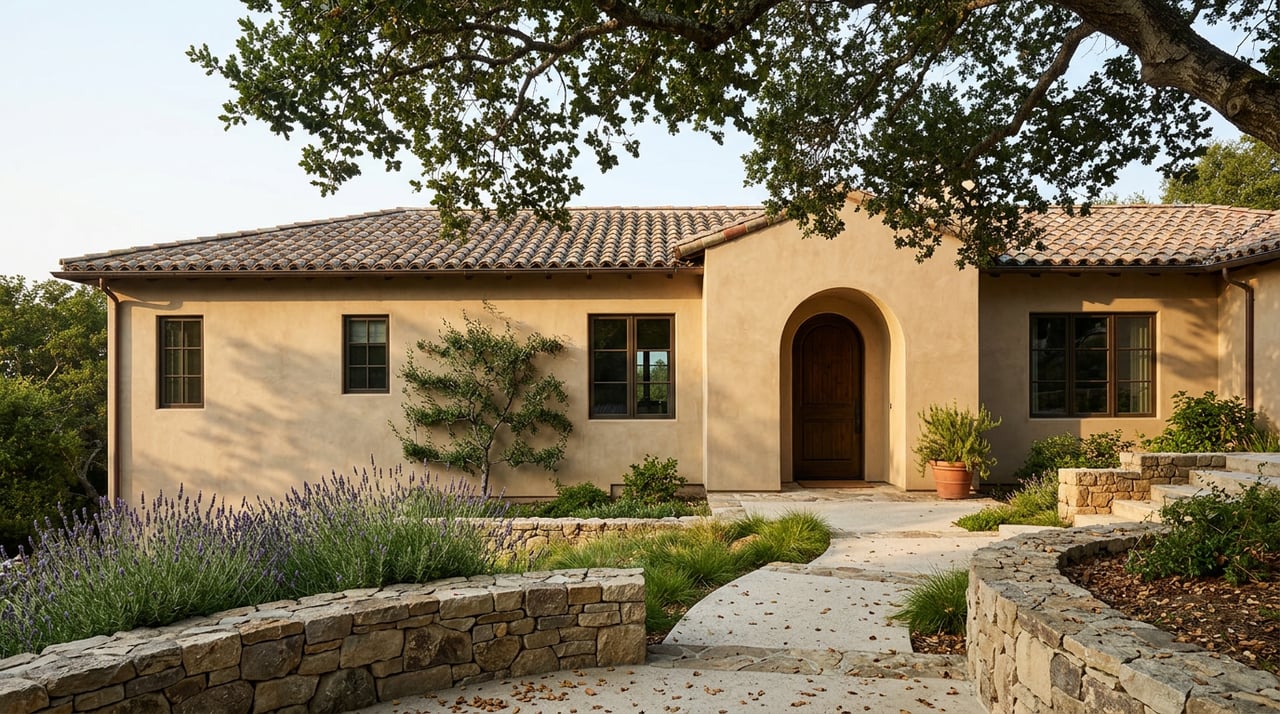
The Earthquake Clearance Every Saratoga Hillside Seller Assumes They've Already Passed
September 17, 2026
September 17, 2026
Picture the scenario that plays out every few months on a cul-de-sac somewhere above Pierce Road or Mount Eden. An estate is settling. The heirs live in Seattle or Austin. They fill out the Natural Hazard Disclosure Statement with their agent, check "no" next to the Alquist-Priolo Earthquake Fault Zone question, and move on to staging photos. As far as the paperwork tells them, the earthquake question is closed.
It isn't. Saratoga runs a second, entirely separate review for hillside property, and it doesn't ask what box got checked on the state form. It asks whether the house sits inside the city's own Ground Movement Potential Maps, and if it does, a remodel, a basement, or an addition can trigger a geotechnical process that has nothing to do with the disclosure most sellers were bracing for.
The Alquist-Priolo Earthquake Fault Zoning Act became law in 1972, a direct response to the 1971 San Fernando earthquake, and it addresses one specific hazard: surface fault rupture, the literal tearing of the ground along an active fault trace. An "active" fault under the Act means one that has ruptured within the last 11,000 years, and the California Geological Survey maps a regulatory zone around each one, typically about a quarter mile wide. If a parcel falls inside that mapped zone, the seller discloses it on the Natural Hazard Disclosure Statement under Civil Code Section 1103.
Here's the detail most sellers never hear: the state law's mandatory pre-construction investigation requirement is written for developments of four units or more. A single hillside house adding a bathroom or finishing a basement doesn't automatically trip a state-mandated geologic study on that basis. Cities are allowed to be stricter than the state floor, and Saratoga is.
Saratoga's own municipal code, Section 15-06.325, requires what the city calls Geotechnical Clearance for any proposed basement or addition to a basement located in an area with geologic or geotechnical hazards and constraints. The city's own page on the requirement names the two conditions plainly: Saratoga hillsides, because of landslide potential, and parcels close to creeks, because of liquefaction potential. Clearing it isn't free. The city charges an $850 flat fee for engineering staff review, plus a deposit for the City Geotechnical Consultant of $5,000 for the first lot and $500 for each additional lot.
Layered on top of that is a narrower, hillside-specific standard tied to a fault most people outside the building department have never heard of. Saratoga's zoning ordinance, written into the Northwestern Hillside Specific Plan adopted June 2, 1981, requires that any habitable structure within 100 feet of a recognized trace of the Berrocal Fault undergo an investigation by a certified engineering geologist, with subsurface trenching and possibly geophysical traverses, unless clear evidence shows no fault crosses the building site. The same section requires a slope stability analysis demonstrating a factor of safety of at least 1.5 against failure in the event of a magnitude 8.3 earthquake on the San Andreas Fault.
Notice the word the city chose for the Berrocal Fault: potentially active. That's a lower bar than the "active" standard the state uses to draw its Alquist-Priolo zones. A trace can fail to meet the state's threshold for an official fault zone map and still fall squarely inside Saratoga's own 100-foot investigation buffer. The two systems are checking different things, run by different agencies, triggered by different definitions of the same word.
| State Alquist-Priolo Disclosure | Saratoga Geotechnical Clearance | |
|---|---|---|
| What it covers | Surface fault rupture only | Landslide, liquefaction, and Berrocal Fault proximity |
| Who requires it | California Geological Survey, via Civil Code 1103 | City of Saratoga, Code Section 15-06.325 |
| When it applies | At time of sale, if parcel is in a mapped zone | Any time a basement, addition, or hillside project is proposed |
| Unit threshold | Mandatory investigation tied to 4+ unit developments | Applies to a single-family addition |
| Cost | Disclosure only, no fee | $850 flat fee plus $5,000 consultant deposit (first lot) |
Most hillside homes changing hands in Saratoga right now were built decades ago, often with additions completed at different points by different owners. An heir selling on behalf of a parent's trust frequently has no record of whether a prior remodel went through geotechnical clearance or slipped through as an unpermitted addition. The clearance requirement doesn't care about the sale itself. It cares about what gets built next, which means a buyer's contractor can reopen the question the moment they pull permits for the kitchen expansion they already planned.
That timing matters more for estate sellers than almost anyone else in the market. A trust administrator working against a court deadline, or a family trying to close out a parent's affairs before the holidays, doesn't have the runway to discover mid-escrow that the addition built in the 1990s was never cleared. The fix isn't expensive curiosity, it's asking the question before the listing goes live.
If your hillside property has any addition, remodeled basement, or construction history you can't fully document, it's worth a call to the Saratoga Community Development Department before you set a list date, not after an inspection contingency surfaces it. Knowing whether a prior project cleared 15-06.325, and whether the parcel sits inside the Berrocal Fault's 100-foot buffer, lets you price and disclose with confidence instead of discovering the gap when a buyer's contractor asks for permit history you don't have.
If you're planning any work on a Saratoga hillside home after closing, even something as modest as converting a portion of a basement, ask your agent to confirm whether the parcel falls inside the Ground Movement Potential Maps before you write your offer. A property that passed every state disclosure cleanly can still require a geotechnical consultant deposit before the city issues a permit for the work you already have planned.
A few questions worth asking before you sign anything:
Does this apply to every home in Saratoga, or only the hillsides? The Geotechnical Clearance requirement is specifically tied to Saratoga's hillside areas and to parcels near creeks. Flatland homes outside those zones aren't subject to it.
If my NHD form says no Alquist-Priolo zone, am I in the clear? Not necessarily. The state disclosure and Saratoga's local ordinance are separate systems with separate triggers. A clean Alquist-Priolo answer says nothing about whether the parcel sits inside the city's Ground Movement Potential Maps or the Berrocal Fault buffer.
Does clearance only matter if I'm actively building something? Yes, in the sense that it's triggered by a proposed basement or addition, not by the sale itself. But because most hillside sales eventually lead to some remodel, buyers should treat it as a near-certain future cost, not a hypothetical one.
Selling or buying a Saratoga hillside estate involves exactly this kind of layered local detail, the sort that a generic disclosure checklist won't catch and a national portal won't flag. Theresa Van Zant and Tom Yore have spent years walking Saratoga's hillside neighborhoods with sellers and their families through exactly these questions. If you're settling an estate, planning a sale, or trying to understand what a hillside parcel actually requires before you list, reach out for a conversation grounded in the specifics of your property, not a generic checklist.

Success starts with the right partnership. At the Yore | Van Zant Real Estate Group, we deliver personalized service, strategic insight, and results that move you forward.